
TEL:+86-17777782574
Contact
In today's technological wave, flexible OLED (organic light-emitting diode) technology is undoubtedly an undeniable force. This technology, with its unique advantages, has brought unprecedented breakthroughs to visual experience, not only revolutionizing the field of consumer electronics, but also demonstrating enormous application potential in multiple industries.
1、 Basic principles and characteristics of flexible OLED technology
Flexible OLED technology, as the name suggests, refers to display screen technology that is made of organic light-emitting materials and has flexibility. Compared with traditional LCD (liquid crystal display) technology, OLED has the characteristics of self luminescence, fast response speed, high contrast, and bright colors. Flexible OLED further breaks the rigid limitations of traditional display screens, allowing them to bend, fold, and even twist like paper.
The core of flexible OLED technology lies in its unique material structure and manufacturing process. It uses organic luminescent materials as the luminescent layer and drives them to emit light through current, thereby achieving display functionality. At the same time, flexible OLEDs use flexible substrates as support, making the entire display screen highly flexible and bendable. This unique structure gives flexible OLEDs significant advantages in display performance, durability, and portability.
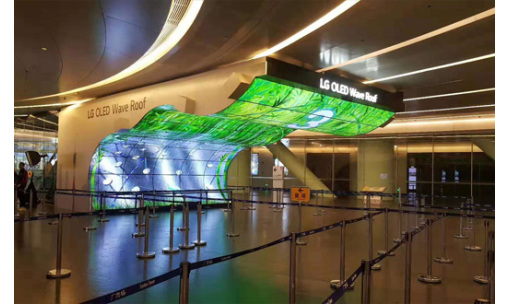
2、 The application of flexible OLED technology in the field of consumer electronics
In the field of consumer electronics, flexible OLED technology has been widely applied. Smartphones, tablets, smartwatches and other devices have adopted flexible OLED displays, bringing users a better visual experience.
Firstly, the flexibility and bendability of flexible OLED displays make devices thinner, lighter, and more portable. For example, smartphones with flexible OLED displays can achieve more rounded corner designs, which not only enhance the feel but also make the device easier to carry. Meanwhile, flexible OLED displays can also achieve curved displays, making the screen more in line with users' visual habits and reducing visual fatigue.
Secondly, the high contrast and vibrant colors of flexible OLED displays provide users with a more realistic visual experience. Whether in direct sunlight outdoors or in dim indoor environments, flexible OLED displays can maintain excellent display performance. In addition, flexible OLED displays also have faster response speeds, making dynamic images smoother and more natural.
3、 The application prospects of flexible OLED technology in other industries
In addition to the consumer electronics field, flexible OLED technology has also shown great potential for applications in multiple industries such as automotive, medical, and aviation.
In the automotive industry, flexible OLED displays can be used in positions such as instrument panels and central control screens. Due to the bendability of flexible OLED displays, they can be freely designed according to the interior space of the car, enhancing the driving experience. Meanwhile, flexible OLED displays can also achieve transparent display function, allowing drivers to observe the outside environment while viewing navigation information.
In the medical field, flexible OLED displays can be used in wearable medical devices, surgical navigation systems, and other scenarios. Due to its lightweight and soft characteristics, flexible OLED displays can better fit the curves of the human body and enhance wearing comfort. Meanwhile, flexible OLED displays can also achieve high-resolution display function, providing doctors with clearer and more accurate medical image information.
In the aviation industry, flexible OLED displays can be used for display systems inside aircraft cabins. Due to its flexibility and impact resistance, flexible OLED displays can adapt to complex spatial layouts and harsh working environments in aircraft cockpits. Meanwhile, flexible OLED displays can also achieve high brightness display function, ensuring clear display effect even under strong sunlight.
4、 The Development Trends and Challenges of Flexible OLED Technology
With the continuous advancement of technology and the growing market demand, flexible OLED technology will usher in a broader development prospect. In the future, flexible OLED technology will pay more attention to improving display effects and reducing costs to meet a wider range of application needs. Meanwhile, with the continuous maturity of flexible OLED technology and the expansion of application scenarios, it will demonstrate enormous potential and value in more fields.
However, the development of flexible OLED technology also faces some challenges. Firstly, the manufacturing cost of flexible OLED technology is relatively high, and it is necessary to continuously reduce production costs to promote its widespread application. Secondly, the reliability and durability of flexible OLED technology still need to be further improved to meet the needs of complex application scenarios. In addition, the environmental friendliness and sustainability of flexible OLED technology also need to be taken seriously and given attention.
In summary, flexible OLED technology has brought significant breakthroughs in visual experience with its unique advantages, and has demonstrated enormous application potential in multiple industries. In the future, with the continuous advancement of technology and the expansion of application scenarios, flexible OLED technology will usher in broader development prospects and bring more innovation and change to society.

Tel:+86-17777782574
Email:Manager@nexoled.com
WhatsApp:+86 17777782574
